India | ca. 18th–19th Century (Folk–Puranic Tradition)
Key Features
Śītalā Devī - The Cooling Mother of Disease and Cure
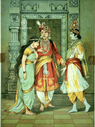
This evocative Indian painting depicts Śītalā Devī, the ancient folk-Puranic goddess venerated across North India as the divine controller of smallpox, epidemics, fevers, and contagious diseases. Unlike deities of distant abstraction, Śītalā belongs to lived religion-invoked directly by households, villages, and mothers seeking protection, healing, and mercy during outbreaks.
Mounted on the Donkey - Humility, Endurance, and Disease-Carriage
Śītalā is shown seated upon a donkey, her traditional vāhana. The donkey symbolizes humility, patience, and the slow but inevitable spread of disease-qualities closely associated with epidemic cycles. In folk belief, the donkey also represents the liminal carrier between affliction and recovery, reinforcing the goddess’s dual role as both inflictor and healer.
Implements of Affliction and Relief
In her hands, Śītalā carries ritual objects associated with sweeping, striking, and purification-often interpreted as the broom that spreads or cleanses disease and the cooling vessel that soothes fever. These attributes express a core theological truth: disease is not random cruelty but divine regulation, and relief comes through appeasement, cleanliness, restraint, and devotion.
Serene Yet Unyielding Presence
Śītalā’s calm, frontal gaze contrasts with the fear her name evokes. She is not wrathful but absolute-detached, impartial, and maternal. Her composure reflects the folk understanding that epidemics are natural forces requiring respect rather than resistance. Worship of Śītalā historically emphasized cooling foods, fasting, silence, and ritual hygiene-early cultural responses to public health crises.
Folk–Colonial Era Aesthetic
Rendered in a restrained, earthy palette with minimal background detail, this image reflects the popular devotional style of late pre-modern India. Such paintings were not temple icons but household talismans-displayed during outbreaks to invoke protection and to remind communities of ritual discipline and moral conduct.
Goddess of Fear, Faith, and Survival
Śītalā Devī occupies a unique place in Indian religious history as a deity born directly from epidemic experience. Her cult predates modern medicine and represents one of humanity’s earliest spiritual responses to contagion, fear, and collective vulnerability-where divine worship, hygiene, and social restraint intersected.
24 × 36 in Museum-Grade Print
Presented as a 24 × 36 inch poster, this artwork is printed on 350 GSM archival matte paper, preserving the subdued tones, delicate linework, and historic character of the original image. Ideal for collectors of folk religion, scholars of medical anthropology, or contemplative spaces exploring the intersection of health, fear, and faith.
Why You’ll Love It
This Śītalā Devī poster is haunting, honest, and deeply human. It does not romanticize divinity- it confronts fragility. The goddess’s stillness atop her humble mount speaks to centuries of lived memory, survival, and reverence shaped by disease. Whether approached as sacred icon, cultural artifact, or historical mirror, this artwork carries a quiet but undeniable power.
Order Now
Bring home a rare visual testament to India’s epidemic goddess and the spiritual history of healing and fear.
Available in 24 × 36 inches, with framed and unframed options, exclusively at The Soma Store.