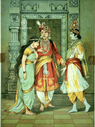
India | Late 19th Century
Region / Date
Indian Subcontinent
Chromolithograph after a painting by Raja Ravi Varma, late 19th century
Key Features
This elegant chromolithograph depicts Padminī - the “Lotus Woman,” one of the ideal feminine archetypes described in classical Sanskrit literature, particularly in the Kama Sutra and related aesthetic traditions. The image embodies grace, beauty, and poetic symbolism, presenting the figure of a woman whose qualities are compared to the purity and delicacy of the lotus flower.
The woman stands amidst a serene lotus pond, gently stepping across floating leaves as pink lotus blossoms bloom around her. Her flowing rose-colored garment moves like a soft breeze around her form, creating a sense of lightness and quiet movement. The composition emphasizes fluid lines and natural elegance, reflecting the refined aesthetic sensibilities that characterized the paintings of Raja Ravi Varma.
In classical Indian texts, the Padminī type represents the highest category of feminine beauty. She is described as possessing a gentle temperament, graceful movements, and a serene, luminous presence. Her features are often likened to lotus petals — soft, symmetrical, and harmonious - symbolizing purity, refinement, and spiritual grace.
The lotus itself carries profound meaning within Indian philosophy and art. Rising unstained from muddy waters, it represents beauty emerging from purity of spirit. By placing the figure within a blooming lotus pond, the artist visually reinforces the symbolic connection between the woman and the flower from which the archetype derives its name.
Raja Ravi Varma was renowned for blending classical Indian themes with European academic realism, bringing mythological and literary figures to life with striking naturalism. Chromolithographs based on his paintings were widely distributed during the late nineteenth century, allowing his imagery to reach homes across India and shaping the visual culture of modern Indian devotional and literary art.
In this artwork, the figure of Padminī transcends simple portraiture and becomes an idealized vision of feminine beauty rooted in ancient Indian aesthetics. The scene evokes serenity, refinement, and timeless elegance - qualities that continue to resonate with viewers today.
Museum-Grade Poster Details
Size: 18 × 24 inches
Paper: 350 GSM archival matte paper
Print Quality: High-fidelity reproduction preserving delicate color gradients and painterly detail
Finish: Non-glare, museum-grade matte
Ideal For: Art collectors, classical Indian art lovers, literary enthusiasts, elegant interiors
Why You’ll Love It
This artwork captures the timeless elegance of classical Indian ideals of beauty. With its serene composition and poetic symbolism, it brings a sense of grace, refinement, and artistic heritage into any space.
Order Now
Celebrate the timeless beauty of classical Indian art with this elegant Ravi Varma composition.
Available in 18 × 24 inches, with framed and unframed options, exclusively at The Soma Store.